
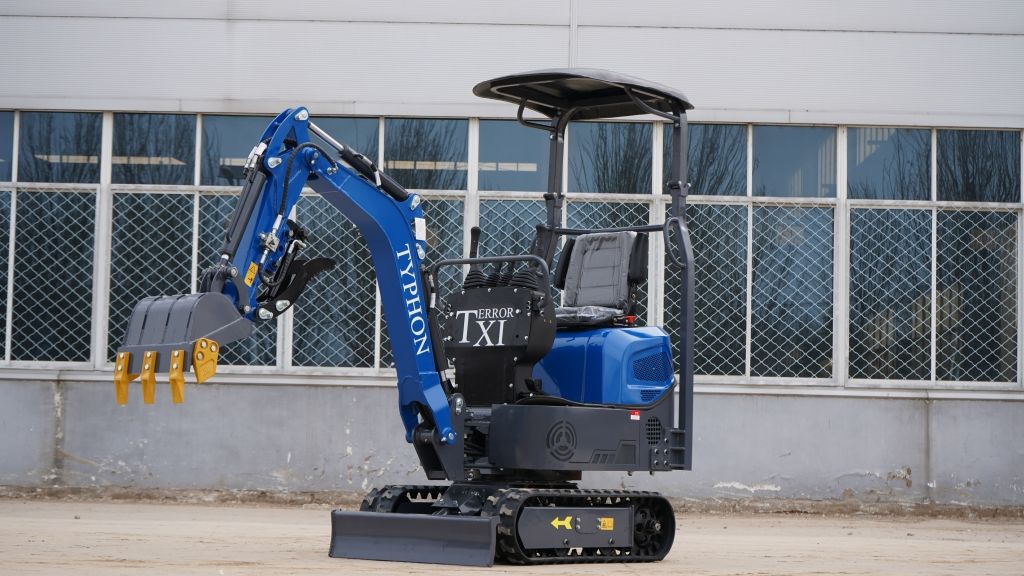
Best Mini Excavator 2025: The Ultimate Buyer’s Guide
If you are reading this, you probably already know that the “bigger is better” mentality in construction is dead. The future is compact.
Mini excavators have completely taken over the job site. They can squeeze through backyard gates, spin 360 degrees in a single lane of traffic, and—thanks to modern hydraulics—lift way more than they have any business lifting.
But here is the problem: The market is flooded.
You have the legacy giants like Kubota and Caterpillar who have been building these things for decades. Then you have the innovators like Bobcat. And recently, we’ve seen a massive surge in “Value Brands” like TYPHON that are shaking up the industry by offering serious power for half the price.
So, which one is actually the “best”?
The honest answer? It depends on your wallet and your workload.
In this guide, we are going to break down the Best Mini Excavators of 2025. We’ll look at the reliability kings, the tech-heavy options, and the budget-friendly beasts that are perfect for the owner-operator.
The “Value King” (Best ROI for 2025)
We are starting here because this is where the market is moving. For small contractors, landscapers, and property owners, the math just makes sense.
1. Typhon Machinery
- Top Models: Typhon Terror XVIII , TYPHON TERROR XIX STORM, TYPHON TERROR XXV
- Best For: Owner-operators, smart investors, DIY pros, and start-up construction firms.
Typhon Machinery has exploded in popularity over the last few years, and for good reason. They have effectively bridged the gap between “affordable” and “reliable.”
Why Typhon is the “Smart Money” Choice: The secret sauce of Typhon is under the hood. They don’t try to reinvent the wheel; they use engines that are already proven winners.
- The Engines: Most Typhon models, like the TERROR XXV (2.5 ton) and the TERROR XIX (2-ton class), are powered by Kubota Diesel Engines (specifically the D902 and D1105). This is crucial. It means you get the same reliability and parts availability as a machine that costs twice as much.
- Included Features (No Hidden Costs): When you buy a Cat or Deere, you often have to pay extra for a “hydraulic thumb” or an “auxiliary hydraulics package.” Typhon machines almost always come fully loaded. The hydraulic thumb, toolkits, and sometimes even extra buckets are standard.
- Versatility: Models like the TERROR XIX STORM feature retractable tracks (allowing you to squeeze through a 36-inch backyard gate) and Boom Swing (allowing you to dig parallel to a wall). These are premium features usually reserved for high-end models.
The Standout Model: TYPHON TERROR XXV This 2.7-ton beast is a perfect example of value. It features a fully enclosed cab with AC and heat (a lifesaver in extreme weather), a Kubota D1105 engine, and massive digging force. It’s built for the guy who needs to work all day, every day, but doesn’t want to drown in monthly payments.
The Verdict on Typhon: If you care about profit margins and performance over having a specific logo on the side of your machine, Typhon is the winner in 2025.
Who is this for? If you are starting a business and want to be profitable on Day 1, or if you’re a landowner tired of renting, a TYPHON is arguably the best financial decision you can make. You get a brand-new machine with a warranty for the price of a beat-up, used Cat with 5,000 hours on it.
The Big Three: The Industry Titans
If you walk onto any commercial construction site in North America, you are almost guaranteed to see one of these three logos. These are the machines you buy when budget is less of a concern than having a dealer network in every zip code.
1. Kubota (The Reliability King)
- Top Models: KX040-4, U35-4
- Best For: Rental yards, heavy daily use, and resale value.
Kubota is like the Toyota of the excavator world. They just run. You will find Kubota engines inside half the other machines on this list (seriously, even their competitors use Kubota engines), which tells you everything you need to know.
Why we love them: The KX Series (conventional tail swing) and U Series (zero tail swing) are legendary for their hydraulic feel. They are incredibly smooth. If you are a new operator, a Kubota makes you look good. They don’t jerk or bounce; they just glide.
The Downside: They are expensive. You are paying for that orange paint. Also, their in-cab technology feels a little dated compared to the spaceship-style interiors of the new Cat models.
2. Caterpillar (The Tech Leader)
- Top Models: 305 CR, 301.5
- Best For: Operators who love technology and comfort.
Caterpillar (Cat) decided a few years ago that they were done being just “rugged.” They wanted to be the smartest machines on the dirt. Their “Next Generation” mini excavators are packed with features that used to be exclusive to massive mining shovels.
Why we love them:
- Stick Steer: This is a game-changer. You can drive the machine using the left joystick instead of the foot pedals. It’s like playing a video game.
- AC/Climate Control: Cat cabs are essentially sealed pressure vessels. No dust, no noise, just ice-cold AC.
- LCD Monitors: Customizable settings for how fast the hydraulics respond.
The Downside: Maintenance can be pricey. Cat parts come with a Cat price tag. If you are a DIY mechanic, the complex electronics might be a headache compared to simpler machines.
3. Bobcat (The Versatility Pro)
- Top Models: E35, E42
- Best For: Contractors who need one machine to do 100 different jobs.
Bobcat invented the compact equipment game. While they are famous for skid steers, their “R-Series” excavators are beasts.
Why we love them: Bobcat understands that you aren’t just digging holes. You are using augers, breakers, thumbs, and mowers. Their clamp-ready extendable arms and auxiliary hydraulic options are top-tier. They also have a very unique “depth check” system that can tell you exactly how deep you are digging without you having to get out of the cab with a tape measure.
The “Smart Money” Choice: Best Value & ROI
Not everyone wants to spend $60,000+ on a mini excavator.
Maybe you are a homeowner who wants to clear land, dig a pool, or trench for utilities. Maybe you are a small contractor who wants to own your machine outright instead of financing it for 10 years.
This is where the market has shifted in 2024 and 2025.
The Buying Guide How to Choose Best Mini Excavator
Before you pull out the credit card, you need to ask yourself three questions. The “best” excavator is useless if it doesn’t fit your job.
1. Weight vs. Towing Capacity
This is the #1 mistake buyers make. They buy a 4-ton machine, then realize their pickup truck can only tow 3 tons.
- 1-Ton Class (e.g., TYPHON TERROR XIX): Can be towed by a decent SUV or light truck. Fits through garden gates.
- 3.5-Ton Class (e.g., Cat 303.5): The “sweet spot.” Strong enough to lift heavy rocks, but usually requires a heavy-duty pickup (F-250/2500) to tow legally.
- 5-Ton+ Class: You likely need a CDL and a dump truck to move these.
2. Tail Swing: Zero vs. Conventional
-
Zero Tail Swing (ZTS): When you spin the cab, the back of the machine stays inside the width of the tracks.
- Pros: You won’t accidentally smash into a house or fence. Essential for residential work.
- Cons: Usually a tighter cab and slightly less lifting stability.
-
Conventional Swing: The butt of the machine sticks out when you turn.
- Pros: More counterweight means you can lift more. More room in the engine bay for maintenance.
- Cons: You have to constantly watch your back.
3. Cab vs. Canopy
Do you need an enclosed cab?
- Canopy (Open ROPS): Great for hopping on and off constantly. Cheaper. You will be cold in winter and hot in summer.
- Enclosed Cab: Essential if you work in rain or snow. It keeps the dust out and the noise down.
The Verdict
So, who takes the crown?
The Winner for Commercial Fleets: Caterpillar 305 CR. If you are running a massive construction company and need 20 machines that all track via satellite, Cat is still the leader. The dealer support is unmatched, and the technology is cutting-edge.
The Winner for Reliability: Kubota KX040-4. If you just want a machine that will start every single morning for the next 15 years with minimal fuss, buy the Kubota. It’s the safe bet.
The Winner for Best Value (The “People’s Choice”): TYPHON TERROR XVIII. This is the winner for the 99% of us who look at the price tag. If you want a machine that digs just as deep and lifts just as hard as the big boys—but allows you to keep an extra $20,000 in your bank account—TYPHON is the undisputed king of value in 2025. It’s the smart play for the modern entrepreneur.
Frequently Asked Questions (FAQ)
Q: Are Chinese mini excavators worth it in 2025?
Five years ago? Maybe not. Today? Absolutely. Brands like TYPHON have bridged the gap by using high-quality Japanese engines (Kubota/Yanmar) inside cost-effective chassis. You are getting reliable power without the brand-name markup.
Q: How many hours does a mini excavator last?
A well-maintained mini excavator can easily last 8,000 to 10,000 hours. However, undercarriage components (rubber tracks, rollers) usually need replacing every 1,500 to 2,000 hours depending on the terrain.
Q: Can I use a mini excavator for clearing trees?
Yes, but be careful. A 1-ton machine will struggle with stumps. For land clearing, you generally want at least a 3-ton machine with a “thumb” attachment to grab and rip roots.