
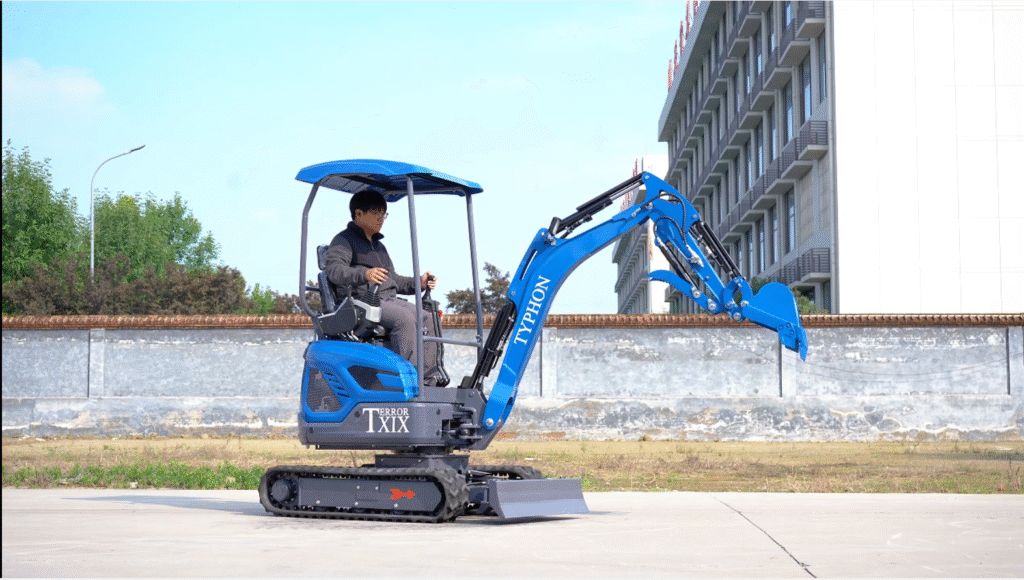
How to Operate a Mini Excavator: The Ultimate Beginner’s Guide
So, you’ve rented a mini excavator for a backyard project, or maybe you’re new to the job site and looking to sharpen your skills. Welcome to the club! Mini excavators (often called “minis” or “compact excavators”) are incredible machines. They can do the work of ten men with shovels in a fraction of the time.
But let’s be real: sitting in that cab can feel a little intimidating at first. There are levers, pedals, and joysticks everywhere.
There is no need to be anxious. We shall dissect this, one step at a time, in simple English. After going through this guide, you will be familiar with the controls, understand which safety measures to take, and be able to execute your initial trench.
Step 1: The “Walk-Around” (Safety First)
Before you even touch the key, you need to respect the machine. A mini excavator looks cute, but it’s a powerful piece of hydraulic equipment that can cause serious damage if mistreated.
The 3-Minute Pre-Start Checklist:
- Fluids: Check the engine oil and hydraulic fluid levels. If the hydraulics are low, the machine will feel “jerky” and weak.
- Tracks: Look at the rubber tracks. Are there big cuts? Is there debris (rocks/mud) stuck in the undercarriage? clear it out.
- Leaks: Look under the machine. Puddles of oil or green coolant are a “no-go” sign.
- The “Call Before You Dig” Rule: This is non-negotiable. If you are digging on private property, ensure you have called 811 (in the US) or your local utility service to mark underground gas and power lines.
Step 2: Entering the “Cockpit”
Climb in using three points of contact (two hands, one foot). Once you are seated:
-
Fasten your seatbelt. (Most modern machines won’t even start without it).
-
Lower the armrest. On the left side, there is usually a plastic lever or the entire armrest housing that lifts up. This is the safety lockout lever. When it is up, the controls are dead. When you push it down, the machine is live. Keep it up for now.
Step 3: Understanding the Controls (The Secret Handshake)
This is where most beginners get confused. Excavators use two joysticks to control the digging arm. Most machines use the ISO pattern (the international standard).
Think of the machine as an extension of your own body.
The Left Joystick (The “Body” and “Reach”)
-
Push Forward: The stick (the arm part furthest from you) reaches OUT.
-
Pull Back: The stick comes IN (toward the cab).
-
Move Left: The entire house (cab) spins LEFT.
-
Move Right: The entire house (cab) spins RIGHT.
The Right Joystick (The “Boom” and “Hand”)
-
Push Forward: The main boom (the big arm attached to the machine) goes DOWN.
-
Pull Back: The main boom goes UP.
-
Move Left: The bucket curls IN (like scooping soup).
-
Move Right: The bucket curls OUT (dumping the soup).
The Travel Levers (Your Feet)
In front of you are two tall levers with pedals attached.
-
Push Both Forward: The machine moves straight forward.
-
Pull Both Back: The machine moves in reverse.
-
Push One / Pull One: The machine spins in place (counter-rotates).
Pro Tip: Always check which way your tracks are facing! If the dozer blade is behind you, your steering controls are reversed. Always keep the blade in front of you when learning.
Step 4: Startup and Stability
-
Turn the key to the ON position (wait for the glow plug light to turn off if it’s a diesel engine in cold weather).
-
Crank the engine.
-
Lower the throttle to idle.
-
Drop the Blade: On your right side, there is a small lever near your hip. This controls the dozer blade in front of the tracks. Push it forward to lower the blade until it lifts the front of the tracks slightly off the ground. This is your anchor. It gives you massive stability while digging.
Step 5: Your First Dig
Now, let’s move some dirt.
-
Positioning: Line up the machine so the bucket is directly over where you want to dig.
-
The Reach: Push the left joystick forward to extend the stick out, and push the right joystick forward to lower the boom until the bucket teeth touch the ground.
-
The Scoop (The Combo Move): This takes practice. You want to pull the left joystick back (dragging the dirt toward you) while slightly pulling the right joystick left (curling the bucket).
-
Imagine you are scooping ice cream. You don’t just drag the spoon; you curl your wrist as you drag.
-
-
The Lift: Once the bucket is full, pull the right joystick back to raise the boom up.
-
The Dump: Spin the cab (left joystick) to your spoil pile. Push the right joystick right to uncurl the bucket and dump the dirt.
Common Rookie Mistakes (And How to Avoid Them)
- The “Jerky” Hands: Beginners tend to slam the joysticks. Hydraulics are sensitive. Feather the controls. Move them partially, not all the way to the edge. Smooth is fast.
- Digging Under Yourself: Don’t dig too close to the tracks. You risk undermining the ground you are sitting on, which can cause the machine to tip into the hole.
- Ignoring the Swing: When you spin the cab, remember that the back of the excavator (the counterweight) swings out too. Don’t smash the rear of the machine into a fence or tree!
Step 6: Parking and Shutdown
When you are done for the day:
- Park on level ground.
- Retract the cylinders: Curl the bucket in and pull the stick in.
- Lower the boom until the bucket sits flat on the ground.
- Lower the dozer blade.
- Raise the safety lockout lever (the armrest).
- Idle the engine for a minute to cool the turbo, then turn the key off.
Final Thoughts
Operating a mini excavator is a skill that relies on “muscle memory.” The first hour will feel awkward. You’ll probably dump dirt on the wrong pile or stall the engine. That’s okay!
Take it slow, focus on safety, and remember: small movements equal big control.
Frequently Asked Questions (FAQ)
Do I need a license to operate a mini excavator?
Generally, for private use on your own property, you do not need a license. However, if you are working commercially or on a public roadway, you may need a hoisting license or specialized certification depending on your local laws.
ISO vs. SAE controls: What is the difference?
ISO is the standard “Excavator” pattern described in this guide. SAE is the “Backhoe” pattern. On SAE, the boom and stick controls are swapped between hands. Most rental machines have a switch (usually under the seat or behind a panel) to toggle between them.
How deep can a mini excavator dig?
It depends on the size. A standard 3,500 lb (1.5 ton) mini excavator can typically dig to a depth of about 7 to 8 feet. Larger 8,000 lb machines can reach depths of 10 to 12 feet.