
8 Excavator Attachments Every Contractor Should Have for Profit
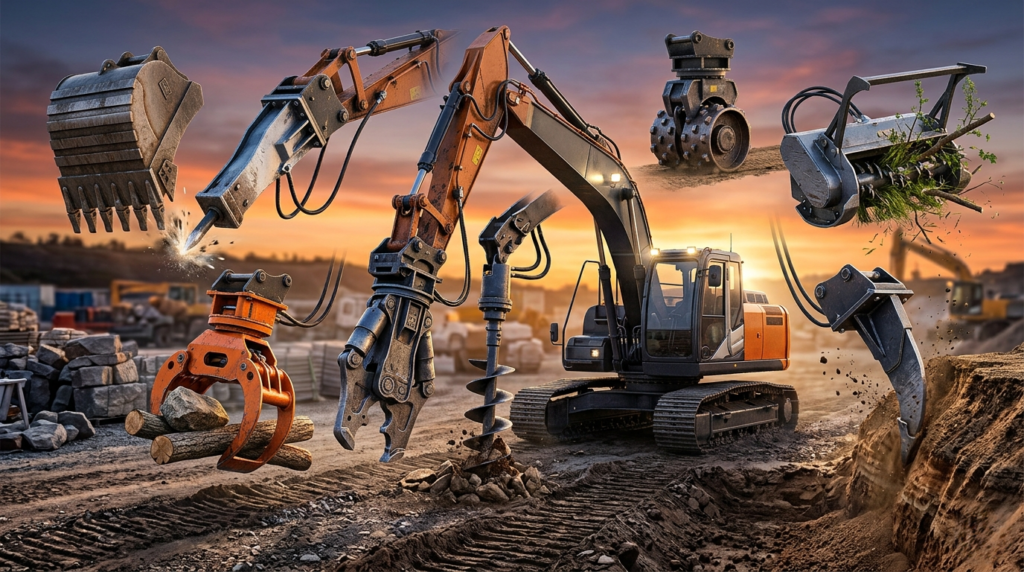
Construction sites in the 21st century demand versatility, speed, and accuracy to stay economically viable. If you rely on only a standard excavator bucket for all tasks, you are significantly lowering the job site efficiency and capping the revenue potential. By using specialized heavy machinery accessories like excavator attachments, contractors can have a single machine that can be changed into a multi-functional powerhouse that can handle demolition, forestry, landscaping, and precision earth moving.
Buying quality mechanical and hydraulic add-ons leads to a direct reduction in operating costs and at the same time creates new revenue opportunities. When your machines can be used to change from digging trenches to crushing concrete or clearing heavy vegetation, your ability to bid on projects will increase significantly. Here we are listing 8 indispensable excavator attachments that will increase the utility of your machines and protect your profits.
Top 8 Excavator Attachments for Every Contractor’s Profit:
1. Heavy-Duty Hydraulic Breakers
Hydraulic breakers, also known as rock breakers or demolition hammers, are necessary tools for projects that involve rock excavation, concrete demolition, or asphalt road cutting. They use a powerful hydraulic force that delivers blows at high speed to break that tough concrete or rock without any effort, making manual labor and smaller pneumatic tools redundant.
- Accelerated Project Timelines: Gives high-energy impacts per minute to break reinforced concrete slabs and rock in a very short time.
- Less requirement for Labor Cost: Reducing the operation of jackhammer crews, thereby the workers in the construction are protected from vibration related strain and redeployment of man power to specialized tasks.
- Broaden the Demolition Service Offerings: Contractors will be able to take on projects like urban renewal, bridge demolition, and highway reconstruction with confidence.
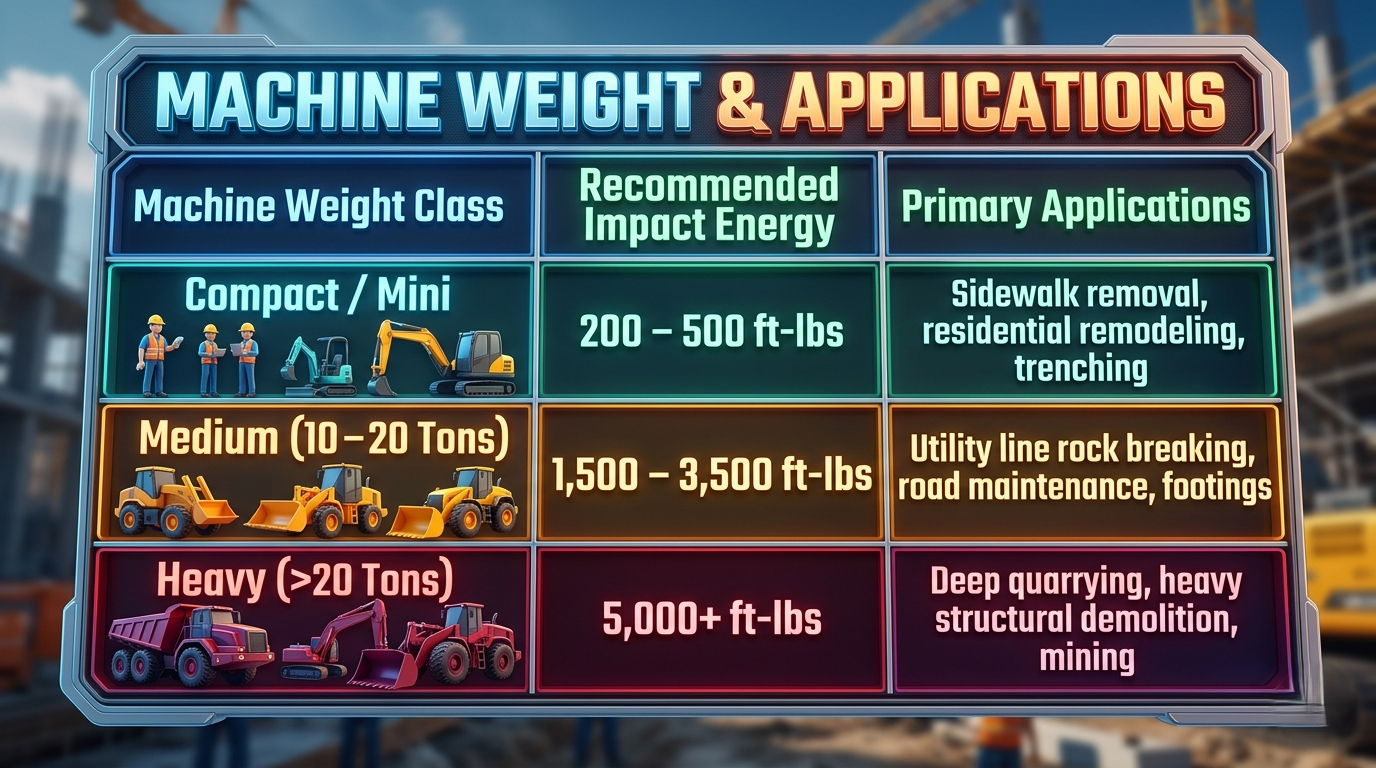
Table: Machine Weight and Applications
| Machine Weight Class | Recommended Impact Energy | Primary Applications |
| Compact / Mini | 200 – 500 ft-lbs | Sidewalk removal, residential remodeling, trenching |
| Medium (10–20 Tons) | 1,500 – 3,500 ft-lbs | Utility line rock breaking, road maintenance, footings |
| Heavy (>20 Tons) | 5,000+ ft-lbs | Deep quarrying, heavy structural demolition, mining |
2. Multi-Functional Hydraulic Grapples
When you are dealing with irregular shaped materials like logs, scrap metal, boulders, and demolition debris, you need a good gripping mechanism to hold them. A hydraulic grapple gives a standard machine the ability to provide dual-arm clamping control, effectively turning your boom into a dexterous mechanical hand.
- Precise sorting of materials: enables operators to separate recyclable metals, wood, and concrete blocks at the spot, adding to the salvage revenue.
- Improved Safety of On-site Operators: Working with ground crews manually hooking chains or rigging straps around unstable debris bundles is a dangerous task that is eliminated.
- Simplified Land Clearing Process: Allows the easy and fast lifting, loading, and stockpiling of large tree stumps, root balls, and heavy brush.
3. High-Torque Earth Augers
Finding exact spots for pier foundations, utility poles, fencing, or commercial tree planting can be very time-consuming when relying on manual equipment. High-torque planetary drive earth augers are capable of cutting dense clay, shale, and frozen ground very efficiently and accurately.
- Perfectly Vertical Hole Accuracy: Equipped heavy-duty universal joints to keep the auger bit hanging in a plumb position even if the excavator is on the uneven terrain.
- Different Flighting Configurations: Able to handle interchangeable auger bits from narrow fencing widths to large structural pier diameters.
- Getting rid of Dedicated Drills: Greatly reduces capital expenditure, removing the overheads and rental costs of obtaining a self-propelled drilling rig.
4. Heavy-Duty Demolition Shears
Cutting through structural steel beams, rebar, guy wires, and industrial scrap pipelines is frequently a problem in large dismantling operations. Demolition shears are equipped with a specially designed jaw pattern and dual hydraulic cylinders that can produce thousands of tons of cutting force.
- Instant Scrap Processing On Site: Structural steel pieces are broken down to the size of foundry transports, hence lowering the cost of transport and maximizing scrap metal market value.
- Very Low Wear and Tear of Mechanical Bits: The heavy-duty shear jaws are designed to take enormous stresses while the booms are spared from damaging feedback forces.]
- Changeable Piercing Tip Systems: Has field-replaceable cutting blades and tips to minimize downtime for maintenance during prolonged field work.
| Shear Model Size | Maximum Structural Cutting Capacity | Best Suited Industry |
| Utility Shears | 6-inch to 10-inch Steel I-Beams | Commercial building interior strip-outs |
| Production Shears | 12-inch to 20-inch Steel Heavy Beams | Industrial plant decommissioning, ship breaking |
5. High-Efficiency Flail Mowers and Mulchers
Very profitable land clearing auctions for brush and trees along highways can be done efficiently only when you mount your excavator with a high-speed mulching head. In fact, you can take contracts for clearing steep embankments and rough terrains.
- Doing Land Clearing Tasks in Single Pass: Standing vegetation and dense brush are shredded in one single movement and turned into homogeneous organic mulch, totally doing away with the need for burning or hauling.
- Reach a Long Way on Steep Embankments: Even in deep ditches or on steep hillsides where the full reach of the excavator arm is utilized, the machine remains safe on flat ground.
- Protection of Structural Components Through Robustness: Constructed from high-strength steel frames and internal bypass valves that protect the hydraulic motor from pressure spikes.
6. Advanced Rotary Screening Buckets
Sifting, sorting, and reclaiming usable material directly on-site saves contractors thousands of dollars in aggregate purchases and waste disposal fees. Rotary screening buckets use a hydraulic spinning drum to separate soil, sand, crushed concrete, and compost by size.
- Reclamation of topsoil and aggregate on-site: A screening bucket separates the fine loam from the rocky debris to produce premium backfill or topsoil on-site.
- Dramatic Waste Transportation Reductions: By recovering usable aggregate material on-site, the volume of mixed debris hauled to landfills is minimized.
- Interchangeable Internal Sizing Screen Panels: Operators have the ability to quickly swap internal mesh screens to meet the different sizing requirements of various projects.
7. Heavy-Duty Compaction Wheels and Plates
Proper compaction of soil in deep utility trenches, under building foundations, and on highway slopes is required if structural settling is to be avoided. Utilizing excavator down-pressure and vibration, hydraulic compaction plates and heavy compaction wheels make it possible to achieve strict soil density targets.
- Fast Trench Backfill at High Density: Enables the achievement of strict Proctor density requirements in deep trenches without the need for crew members to enter potentially hazardous zones equipped with manual rammers.
- Vibratory Structural Soil Compaction at Depth: Through thousands of heavy impacts each minute, loose granular soils are realigned and compacted into a firm base.
- Low Maintenance Mechanical Design: The equipment is made with rugged solid-steel components and heavy-duty rubber isolators to protect the machine from the effects of long-term vibration.
8. Hydraulic Quick Couplers
The ability to generate profit from the previous seven pieces of equipment is in no small part dependent on how fast your operator can switch between them. A hydraulic quick coupler enables the operator to change tools directly from the safety of the cab in less than a minute and thus keeps project momentum high.
- Rapid Under-One-Minute Tool Changes: Allows instantaneous switch from a digging bucket to a concrete breaker which makes sure that the right tool is always used without affecting the project schedule.
- Dual-Locking Fail-Safe Security Systems: Incorporates mechanical safety locks and visible pressure indicators to ensure the attachment remains securely locked in place.
- Drastic Reduction in Labor Idle Time: Thanks to the elimination of the physical inconvenience of manually removing heavy pivot pins during tool changes, operators are no longer delaying tool changes.
| Coupler Variety | Typical Swap Time | Safety Mechanism Type |
| Mechanical Pin-Grabber | 5 – 10 Minutes | Manual safety pin insertion |
| Hydraulic Pin-Grabber | Less than 60 Seconds | Automated pilot-operated check valves & spring locks |
Frequently Asked Questions – Top 8 Excavator Attachments
Which excavator attachments lead to the highest return on investment for small contractors?
Small operators can rapidly get on the road to profitability with hydraulic quick couplers, general-purpose grapples, and hydraulic breakers. A quick coupler will save hours of manual labor during tool changes while a grapple will open up highly profitable land clearing and debris sorting opportunities. Adding a breaker will allow a compact machine to be able to do concrete removal work which is a lucrative market, thereby keeping your asset utilized across various work types.
Is it possible to operate high-flow hydraulic attachments on a standard mini excavator?
This is fully dependent on the auxiliary hydraulic flow capacity of your mini excavator and its structural lifting capacity. Tools with high demands for power such as forestry mulchers and rotary cutters must have a continuous high-flow hydraulic circuit in order to perform well without causing the system to overheat. Normally check the GPM and pressure ratings of your machine against those needed by the tool.
What are the most important maintenance steps that will prevent failures in hydraulic attachments?
Preventative maintenance focuses on applying grease on a daily basis, keeping an eye on the cleanliness of hydraulic fluid, and hose abrasion checks. Tools that have high vibrations such as breakers and compaction plates should be inspected frequently for bolts and seals to avoid fluid leaks. Cleaning the hydraulic oil in the excavator and operating it at the proper temperature greatly enhances the service life of motors in all tools.
Should I rent specialized excavator attachments or purchase them for long-term projects?
If you have anticipated that a certain attachment will be utilized in over 50% of your current and also future project pipeline, then generally, buying is a more profitable option. Buying will not only build your asset equity but will also allow you to bid responsively on short notice jobs. As for very specialized, rarely used equipment like large demolition shears or screening buckets, renting will safeguard your cash flow and avoid you from incurring storage costs in the long run.
How can a hydraulic quick coupler enhance safety performance on a construction site?
Hydraulic quick couplers make it possible for operators to change tools without leaving the comfort of the excavator cab, which greatly reduces ground crew exposure to dangerous swing zones. In addition, upgraded models come with automated backup locking mechanisms and visual engagement indicators which together ensure that the tool is tightly locked. This dramatically eliminates the risks of heavy buckets accidentally dislodging due to improperly installed pins.
Which types of attachments are best suited for onsite concrete and rock processing?
In order to work efficiently with concrete and rock, contractors depend on heavy-duty hydraulic breakers to create fractures in the large masses, followed closely by concrete pulverizers that separate structural rebar. Once the material is reduced in size, a rotary screening bucket is used to sift out fine dust from reusable aggregate. This cycle leaves them with site waste turned into spec-compliant structural backfill material and thus saves them thousands of dollars on material purchase costs.
How to properly match the weight of an attachment to my particular excavator model?
In every instance, check your excavator’s manufacturer’s operating manual to know about the maximum tip-load capacity and operational weight limits. A tool that is too large will cause instability, wear of the structural pins faster, and may even cause the machine to tip over when at full reach. Always consider the tool’s operating weight and expected material load so that together they are within your machine’s stability envelope.