
Top 8 Every contractor needs these excavator attachments to make money
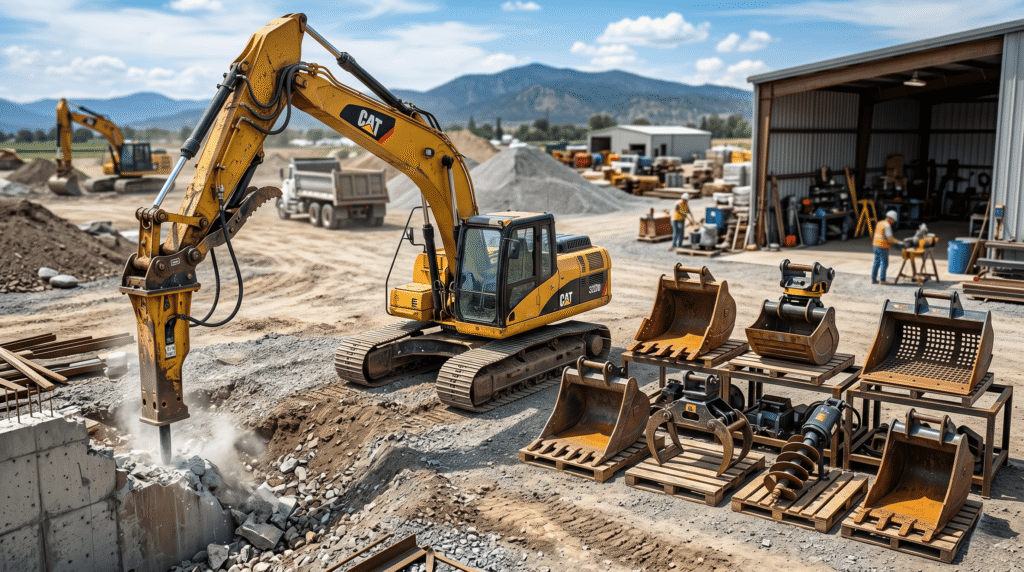
The construction industry today is more competitive than ever, which means contractors have to do more with less. Your fleet’s ability to do a lot of different things is much more important than how many machines you have. With the right high-quality excavator attachments, a single mini excavator can go from being a simple digging tool to a powerful machine that can handle demolition, landscaping, forestry, and precision utility work.
Investing in specialized excavator attachments means you won’t have to rent specialized equipment, you’ll save money on labor, and your projects will go much faster. This planned growth of your machine’s capabilities is the quickest way to boost your hourly ROI and get contracts with higher margins.
The secret to the success of many contracting companies is often “machine utilization rates.” A machine that can only do one thing and is sitting around is a liability. A machine that can switch from trenching to breaking concrete in minutes is a profit center.
TYPHON Machinery makes strong, high-performance excavator attachments that work perfectly with compact and mini excavators. These tools are built to last through tough site work while still being precise enough for delicate city projects. It’s important for any contractor who wants to grow their business and take over the local market to know which attachments give them the best return on investment.
Top 8 Excavator Attachments for Every Contractor
1. The Hammer, or Heavy-Duty Hydraulic Breaker
Demolition is often the first and most profitable part of a construction project, but it needs a lot of power to do it. With a hydraulic breaker attachment, your excavator can easily break through reinforced concrete, asphalt, and rocky ground.
This attachment is necessary for urban redevelopment projects that need to quickly clear away old foundations or driveways. Your operator can do the job in a fraction of the time instead of hiring a crew with handheld jackhammers or subcontracting the work. This keeps the profit in your business.
- Impact Energy: High-frequency impact rates make sure that even the hardest materials break quickly, which cuts down on wear and tear on the excavator’s arm.
- Vibration Control: New breakers are made to reduce vibration, which protects the hydraulic seals on the machine and makes it more comfortable for the operator during long shifts.
- Versatility: Great for fixing roads, tearing down bridge decks, and getting a site ready when rock outcroppings get in the way.
2. The 4-in-1 Bucket that Can Do It All
A regular bucket is great for moving dirt, but a 4-in-1 bucket (also called a multi-purpose bucket) can do so much more. This attachment can be used as a regular bucket, a bulldozer blade, a grader, or a grapple.
This means that you can dig a trench, fill it in, level the ground, and pick up trash without having to change the attachment. This efficiency saves minutes on each cycle, which adds up to hours saved over the course of a week-long project.
- Built-in Clam Function: The design with the opening at the bottom lets you dump things accurately and pick up things like pipes or logs.
- Serrated Edges: These tools often have hardened teeth or edges that let you scrape and level uneven surfaces aggressively.
- Operational Speed: Cuts down on the number of machines needed on-site, which saves fuel and makes transportation easier.
3. The Power Auger for Accurate Drilling
Landscaping and civil engineering often involve building fences, retaining walls, and digging post holes. Digging these holes by hand is slow and hard work, but with an auger attachment, it’s easy.
TYPHON’s auger drives have a lot of torque, which lets them dig into clay, frozen ground, or compacted soil. By making sure that the holes are always perfectly vertical, you use less concrete for footings and make sure that the installation is strong, which means fewer callbacks and happier clients.
- Variable Flighting: Comes in a range of diameters and lengths to meet the needs of different projects, from planting trees to building fences.
- Heavy-Duty Drive Motors: Designed to keep the machine from stalling even in tough soil conditions, so it works well all day long.
- Quick Alignment: The operator can line up the drill exactly from the cab, which reduces site disturbance and the need for manual marking.
4. The hydraulic grapple for moving things around
People often forget about waste management and site cleanup, which are two areas where money can be lost. A hydraulic grapple turns your excavator into a precise claw that can sort through trash, load trucks, and clear land.
The grapple gives you a better grip than a regular bucket when you need to move big brush, jagged pieces of concrete, or scrap metal. This is especially useful for clearing land and restoring areas after disasters, where sorting materials on-site can lower disposal costs.
- Dual-Action Tines: These tines have a wide opening that lets you grab a lot of material at once while still holding heavy items tightly.
- Rotational Options: Many grapples can rotate 360 degrees, which makes it easy to put materials in tight spaces or on trailers.
- Tough Construction: Made of steel that won’t wear out, so it can handle rough materials like demolition debris without falling apart.
5. The Utility Work Trenching Bucket
When it comes to laying fiber optics, water lines, or electrical conduits, precision is key. A dedicated trenching bucket is narrower and deeper than a regular bucket, which lets you make clean, straight cuts with little over-digging.
You save money on backfill material and time spent on compaction by only taking out the right amount of dirt. In utility contracting, the main things that make a project profitable are how quickly and accurately the trenches are dug.
- Narrow Profile: Made to fit the width requirements of local building codes so that time and materials aren’t wasted.
- Designs that clean themselves: Many models have a tapered shape or ejector plates to keep wet clay from sticking to the inside of the bucket.
- Reinforced Side Cutters: Protects the bucket from premature wear when working in abrasive or rocky soils.
6. The Plate Compactor for Making the Soil Stable
Soil stabilization is very important after the pipes are laid or the foundation is set. The hydraulic plate compactor attachment lets the excavator get into deep trenches or up steep slopes that walk-behind compactors can’t safely get to.
This attachment shakes the soil and gravel at high frequencies to make sure the base is solid for the next step of construction. It often reaches the right density levels faster than manual equipment because it uses the weight of the excavator.
- Extended Reach: Lets compaction happen in places that are too dangerous or hard to get to for ground crews.
- Multi-Tasking: In some types of soil, it can also be used to drive sheeting or posts into the ground.
- Hydraulic Efficiency: It can run on the standard auxiliary hydraulics of most mini excavators, so it’s a “plug and play” way to make more money.
7. The Ripper for Frozen or Hard Ground
You usually have to break the surface before you can dig. A ripper attachment is a single, pointed shank made of strong steel that focuses the excavator’s entire breakout force on one point.
This is the best tool for “pre-ripping” frozen ground, thick roots, or limestone before you bring in a bucket. It keeps your more expensive buckets and hydraulic parts from getting too much stress, which makes your whole fleet last longer.
- High Penetration: The sharp, narrow profile goes through surfaces that would bounce a regular bucket tooth.
- Replaceable Tips: The points are wear-resistant and can be easily changed, so the tool stays sharp even after years of use.
- Less work: In many residential and light commercial settings, it replaces the need for blasting or heavy drilling.
8. The Log Grab and Timber Shears for Landscaping
Specialized timber attachments are game-changers for contractors who clear land or do large-scale landscaping. You can stack and move wood quickly with a log grab, and shears can cut through thick trunks in seconds.
With these tools, a small group can clear a whole lot in a day. It would take days to do the same thing with chainsaws and manual hauling. The safety benefit alone is huge because it keeps workers on the ground away from trees that are falling and machines that are moving.
- Precision Control: Lets the operator carefully place logs for processing or loading, which reduces damage to the area around them.
- High Clamping Force: Keeps heavy logs from slipping while they are being moved, which keeps the machine and the people on site safe.
- Attachment Compatibility: Made to work with TYPHON’s quick-hitch systems so you can quickly switch between clearing and digging.
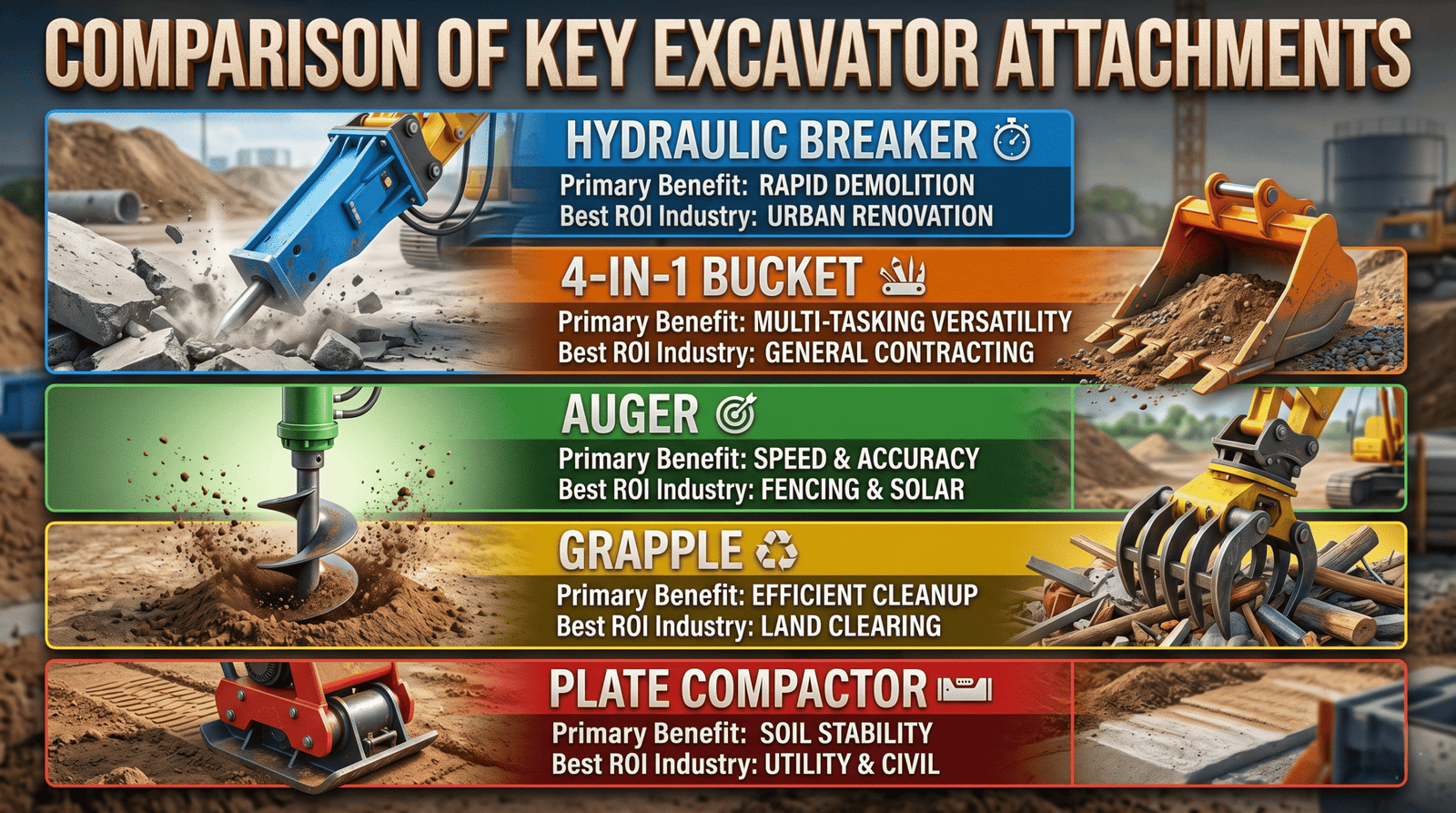
Comparison of Key Excavator Attachments
| Attachment Type | Primary Benefit | Best ROI Industry |
| Hydraulic Breaker | Rapid Demolition | Urban Renovation |
| 4-in-1 Bucket | Multi-Tasking Versatility | General Contracting |
| Auger | Speed & Accuracy | Fencing & Solar |
| Grapple | Efficient Cleanup | Land Clearing |
| Plate Compactor | Soil Stability | Utility & Civil |
Frequently Asked Questions (FAQs) – Excavator Attachments
What are the most common attachments for excavators that are used in construction?
The general-purpose bucket, hydraulic breaker, and auger are the most common attachments. But to make money, you usually need a grapple to move debris and a trenching bucket for special utility work.
How do I pick the right attachment for my mini excavator?
You need to make sure that the attachment’s hydraulic needs (flow and pressure) match those of your machine. Also, think about how heavy the attachment is so that it doesn’t go over the machine’s lifting limit or make it less stable.
Are the attachments I use with different brands of excavators the same?
Yes, if you use standard pin-on dimensions or a universal quick-hitch system. Most TYPHON attachments work with major brands as long as the hydraulic flow rates are the same.
How much do attachments for excavators make projects go faster?
Research indicates that employing specialized attachments can enhance site efficiency by 30% to 50%. For example, using a grapple instead of a bucket to clear can cut the time it takes to do the job in half.
Is it hard to keep hydraulic attachments in good shape?
Not always. Most need to have their pivot points greased on a regular basis and their hydraulic hoses and seals checked on a regular basis. The most important thing you can do to keep your hydraulic oil in good shape is to keep it clean.
Should you buy or rent attachments for your excavator?
If you use an attachment for more than 40% of your work, it’s usually better to buy it. Owning something means you can use it right away and it adds value to your business equipment.
Do attachments change the warranty on my mini excavator?
Using attachments that the manufacturer says are safe or that work with the machine’s rated capacity usually doesn’t void the warranty. Always look in your machine’s manual for the maximum amount of auxiliary hydraulic power it can handle.